A First Visit to a Nearby Park: Notice the Quiet Corners
A first visit to a nearby park can feel calmer when you choose one small feature, pause at overlooked edges and let the place set an easy pace.
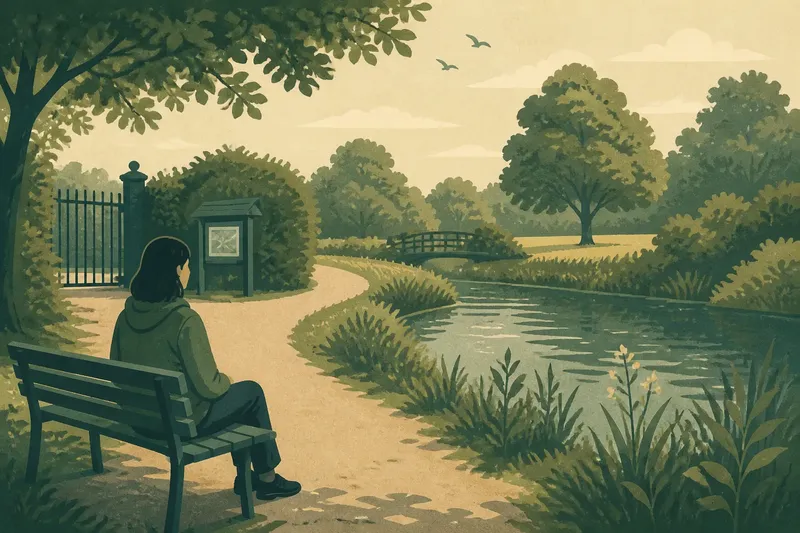
You reach the nearby park with an hour free, pass the main path and hear birds in the hedge beside the gate. On a first visit to a nearby park, choosing one small feature to follow can make the place feel legible without hurrying.
Use these pauses as a loose sequence, not a route to complete. Choose what catches your attention, and turn back whenever you feel ready.
1. Let the entrance set your pace
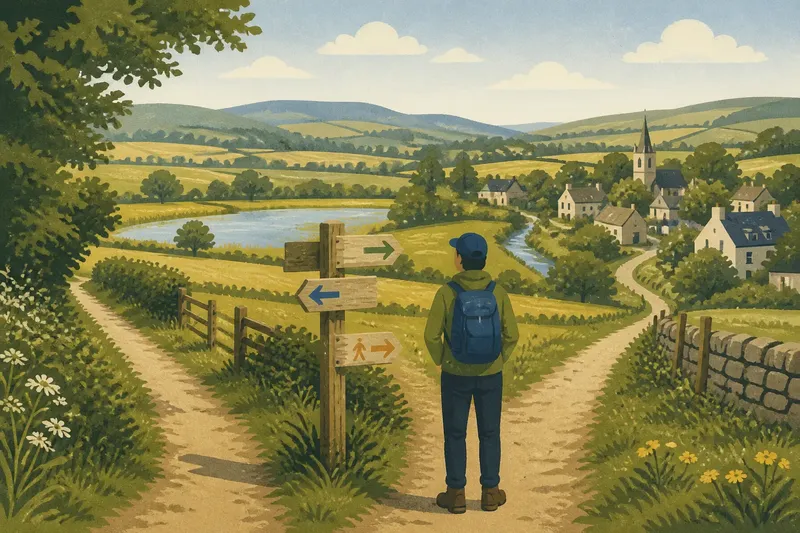
Pause just inside the entrance before choosing a direction. Notice where paths branch, where people gather and which way the noise thins. This brief look helps you avoid setting off on autopilot behind the busiest stream of visitors.
Find a clear place to stand without blocking the gate or path: perhaps a wide verge, a noticeboard set back from the entrance or a bench. If a park map is available, use it to orient yourself, not to plan every turn. You are looking for a comfortable starting point, not a route that covers the most ground.
2. Choose one small feature to follow
Pick something modest that can guide your attention for a while: a line of old trees, the curve of a stream, a row of fence posts or the changing edge between mown grass and longer growth. Following one feature gives the outing a thread without requiring you to keep moving.
Let the feature lead only as far as it remains easy to follow. A hedge may break at a playing field; a stream may disappear behind a fence. That is a natural point to pause, look around and decide whether to continue with it or let another detail take over.
3. Give the overlooked edges time
Park edges often offer more to notice than their position suggests. The border where woodland meets a lawn, the shaded side of a footbridge or the margin around a pond can hold shifts in light, sound and texture that are easy to miss from the centre of a path.
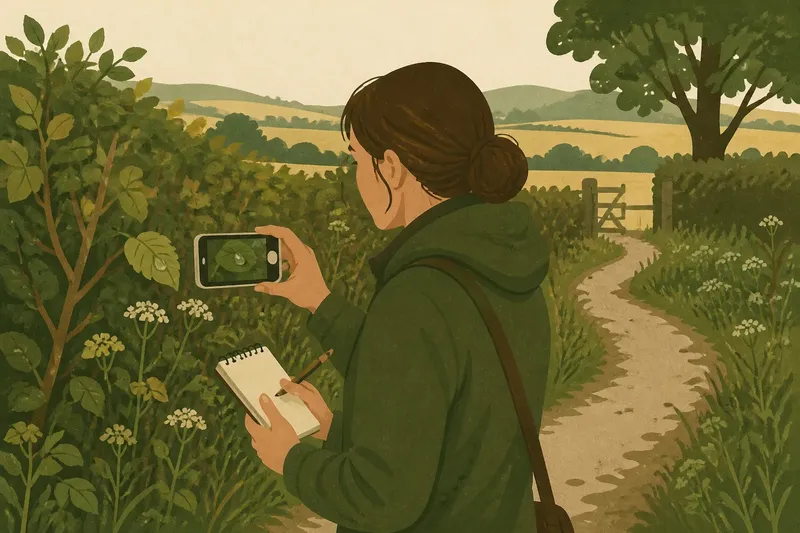
Stay on public paths and keep a comfortable distance from water, steep banks, wildlife and other visitors. There is no need to reach into hedges or step through planted areas; watching from a suitable spot can reveal plenty. Attention is like a torch beam: it shows more when held steady than when swept everywhere at once.
4. Stop where the park changes character
Notice a threshold: the point where gravel gives way to grass, open ground becomes shade, or a straight path bends behind a stand of trees. These small transitions can make a place feel different without taking you far from where you began.
At the change, stop long enough to register what has shifted. Perhaps voices fade, the air feels cooler or the view opens towards a field. You do not need to identify every plant or bird; a plain observation is enough to make the pause your own.
5. Sit where you can watch without getting in the way
A bench is useful, but it is not the only place to pause. A broad patch of public grass or a low wall away from a narrow path may suit, provided it is comfortable and permitted. Choose a position that leaves room for others and does not interrupt a game, gathering or route through the park.
Once settled, let your eyes rest on one area: the surface of a pond, the movement of leaves or people crossing an open space. If the seat is exposed or busy, move on rather than forcing yourself to stay. A good pause should make the visit easier, not turn into an endurance exercise.
6. Follow one detail, not every sound
When several things compete for attention, choose one detail and stay with it for a little while. It might be the pattern of shadows across a path, repeated calls from one part of the trees or the way wind moves through different plants. Then notice what changes as you remain still.
Say you arrive beside a small pond and hear traffic beyond the boundary. You choose the ripples as your focus; after a pause, you notice leaves drifting towards the bank and a patch of reflected sky opening as the wind eases. This invented moment needs no special equipment and gives you a reason to linger without claiming to have seen the whole park.
What should you look for on a first park visit?
How do I choose a quiet corner?
Look for a place beside, rather than in the middle of, the main flow: a path widening, a sheltered bench or an open edge with room to stand. If it is crowded or feels uncomfortable, choose another spot rather than waiting for it to become quiet.
What if the park feels too busy?
Move away from the entrance, playground or central path if another public route is available. You can also make the visit shorter and focus on one small detail near the edge instead of trying to find complete silence.
How long should I stay?
Stay while the pause feels pleasant and leave when your attention or comfort runs out. A short visit can still give you a clear impression of one corner, one change in the landscape or one sound.
Should I follow a map or wander?
Use a map to check where paths lead and to avoid accidentally choosing a longer outing than intended. Within that boundary, allow yourself to stop and change direction rather than treating the map as a task list.
8. End by noticing what you would return to
As you head back, glance once at the feature you chose and see whether it still holds your attention. You might remember the bend in the stream, a quiet bench or the way the wooded edge softened sounds from the path. No record is required, though a simple note can help you find the spot again.
For a first visit to a nearby park, the useful measure is not how much ground you covered but whether you found one place you would willingly pause again. If the park’s paths, access or facilities matter to your plans, check its posted information or local guidance before setting out. That small bit of orientation leaves the rest of the visit free for noticing.