Before the Daypack: How People Carried a Picnic by Hand
Before the daypack, picnic baskets and food hampers made outdoor meals portable. Learn how their materials and design changed what people could carry.
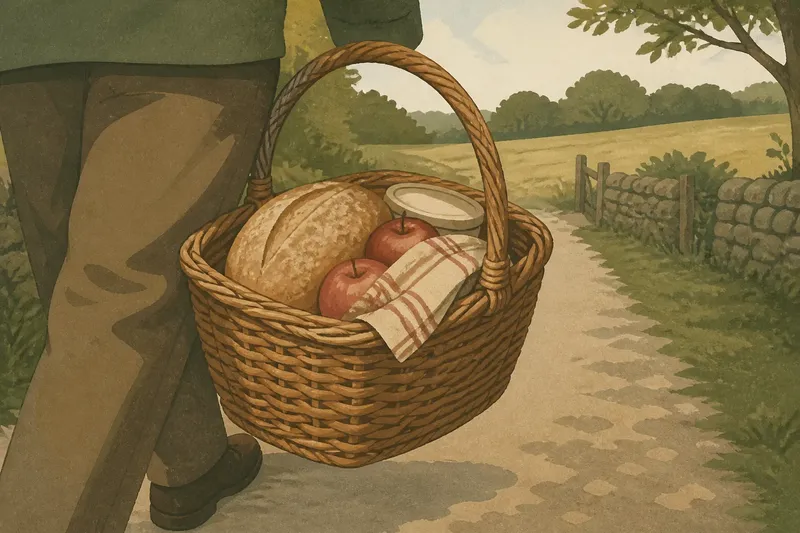
A wicker basket bumps against a walker’s knee on the lane to a field, with bread, apples and a folded cloth tucked inside. The history of carrying a picnic by hand is less a story of one invention than of people adapting familiar containers to take meals outdoors.
What did people use to carry food outdoors?
There was no single standard picnic carrier. People could use baskets, hampers, cloth bundles or boxes, depending on what they had and what the food needed. A wrapped loaf and fruit asked little of a container; crockery or a dish that might spill called for firmer protection.
People also carried food outdoors before the word “picnic” became closely associated with a particular kind of leisure meal. Workers taking provisions into a field, travellers carrying food on a journey and families eating in a garden did not all need the same kit.
The container helped determine what could travel and how it would be served. A cloth bundle could carry a modest meal, while a basket or hamper might also hold a cup, plate, utensils or napkin.
How did baskets and hampers suit different outings?
In broad terms, woven baskets were useful for carrying goods, and a handle could make one convenient for a short journey. That does not mean every basket was designed for picnics, or that one particular kind of outing created the form. People could put an ordinary household basket to new use, while more specialised hampers could be arranged to carry food and serving pieces together.
A lidded hamper offered a more enclosed space than an open basket. Some were divided or fitted to keep items in order; others were simply sturdy containers used for the occasion. The exact design varied, so “hamper” and “basket” are not always precise labels for distinct forms.
Think of a hamper as a cupboard with a handle: it groups the parts of a meal until it is time to unpack them. That arrangement could make serving easier, but it also meant carrying a larger, more structured object.
How did the carrier affect the meal?
Food that could be wrapped or packed securely was easier to carry. Bread, fruit and other provisions that did not need elaborate serving suited a simple bundle or basket. A more protective carrier could make it practical to bring dishes, cups and utensils as well.
There were trade-offs. A rigid container could help protect its contents but take up room when empty. A soft bag or cloth bundle was easier to fold away, though it offered less protection for fragile items. The right choice depended on the food, the route and how much equipment the meal required.
What materials shaped picnic carriers?
Woven materials could form a structured carrier with a handle, while wood could provide a firmer shell. Cloth and paper served for simpler loads. These materials offered different balances of protection, weight and ease of storage; none removed the need to wrap delicate items or contain food that might leak.
Modern picnic bags may use washable linings, closures or insulating layers, while a traditional hamper offers a rigid structure and a familiar way to arrange a meal. These are different solutions to a similar packing problem, rather than a simple progression in which one form makes the others obsolete.
What should you check before choosing a picnic carrier?
Start with the food and the route, then check how the carrier will handle the load. Each observation points to a practical decision:
- Handle or strap: If it feels uncomfortable with the packed load, choose a carrier with a better grip or shoulder strap; otherwise, the handle may suit a short walk.
- Interior shape: If dishes or food tubs will sit loosely, add a divider or choose a closer-fitting carrier; otherwise, use the available space for the planned meal.
- Closure: If the lid or fastening leaves contents exposed, choose a more secure closure or pack the food in covered containers; otherwise, the carrier can help keep the load together.
- Cleaning: If crumbs or damp cloths would be difficult to remove, choose a wipe-clean or washable interior; otherwise, check that the material suits the way you plan to use it.
- Food separation: If ready-to-eat food could touch a leaking container or dirty utensils, use separate sealed containers or pack those items apart; otherwise, keep them grouped in the carrier.
- Storage at home: If a rigid hamper would be awkward to store, choose a collapsible bag; otherwise, a firm container may also be useful for storing household items.
For food safety, use suitable containers and follow the food’s storage directions, especially for anything that needs to remain chilled. Follow the carrier’s own care instructions too, as materials and linings differ.
How would a hand-carried picnic work for a short walk?
Say you plan to walk from a cottage to a nearby field with a loaf, two apples, a wrapped portion of cheese and a cloth. You put the bread and apples in a small tote, keep the cheese in its own sealed container, and tuck the cloth beside them. The resulting load is compact, keeps the food grouped and leaves out dishes you do not need.
If you decide to bring plates and cups as well, the trade-off changes. Imagine adding two plates and cups: you wrap them in a tea towel and place them in a firm-sided carrier, with the food tubs closed and packed beside them. The dishes are then less likely to knock together, but the carrier is bulkier and may be less comfortable over rough ground.
What do readers ask about carrying picnics by hand?
Did people carry food outdoors before the word “picnic”?
People carried provisions outdoors long before “picnic” became a familiar term for a shared meal outside. Baskets and cloth bundles were among the possible carriers, but the choice varied with the food and the journey.
What is the difference between a basket and a hamper?
A basket often suggests an open or simply covered carrier, while a hamper often suggests a lidded container with room for provisions. Everyday usage overlaps, so the distinction is not fixed.
Why were woven baskets useful for carrying food?
A woven basket could provide structure and a handle, helping keep provisions together on a short trip. It did not by itself protect fragile food or prevent leaks, so wrapping and suitable containers still mattered.
Is a traditional hamper useful for an outing?
It can suit a meal that includes dishes or serving pieces and benefits from a firm container. For a longer walk or a small snack, a lighter bag may be easier to carry; choose according to the route and the load.
What can the history of carrying a picnic teach us?
Different carriers made different kinds of outdoor meals manageable. A cloth bundle suited a simple lunch, while a basket or hamper could group provisions and serving items. These are broad practical distinctions, not a single timeline in which every outing led to a new design.
When choosing a picnic carrier today, use the same basic logic: match the container to the food, the route and the way you want to serve the meal. A small load on a smooth path may need little more than a tote; dishes on uneven ground call for more protection, and the extra structure is worth carrying only if it makes the meal easier to manage.