The Overpacking Habit: When Every What-If Gets Its Own Item
The overpacking habit can make a simple rural outing harder to enjoy. Sort planned essentials from imagined scenarios before choosing what to carry.
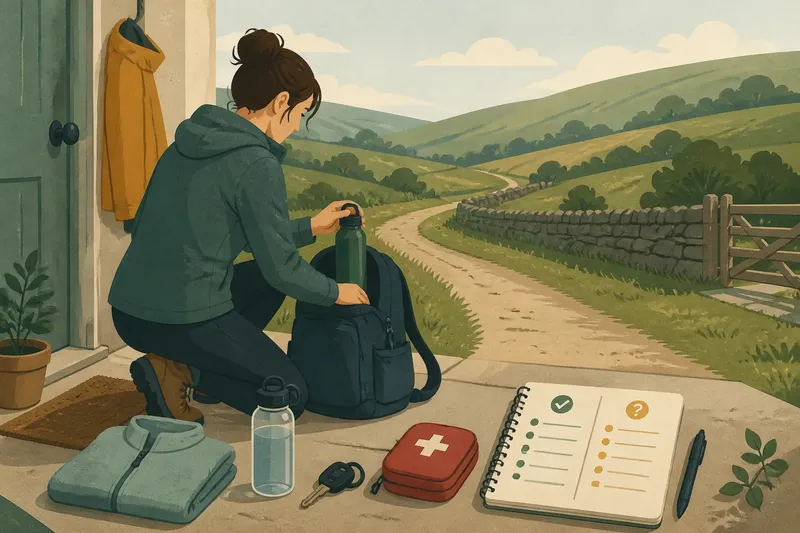
You are by the door for a walk along a familiar footpath when a spare jumper, a second drink bottle and a small first-aid pouch all seem sensible. The overpacking habit often begins this way: each possible inconvenience earns its own item, until the bag is organised around situations that may never arise. A better decision starts by separating what the outing calls for from what worry can imagine.
What counts as an essential for this outing?
An essential has a clear job in the plan you have actually made. If you are going out in cool weather, a warm layer may be useful; if you expect to be away through a meal, food belongs on the list. A spare object whose purpose is simply “just in case” needs a closer look.
Begin with the route, duration, conditions and company. A short stroll near home is different from an afternoon on an unfamiliar track, and a walk with a young child may involve needs that do not apply when you go alone. The setting, not a generic packing ideal, should shape the bag.
It can help to make two short lists before packing:
- Planned essentials: items tied to a known part of the outing, such as water for the time outside or a layer for the forecast.
- Possible extras: items tied to a scenario you have not planned for, such as a spare shirt for an unlikely mishap.
Keep the first list practical and review the second item by item. This is not a test of toughness; it is a way to make each carried object answer a real need rather than a vague unease.
Which situation are you packing for?
Is this a familiar outing close to home?
For a short, familiar walk with easy ways to turn back, carry what supports the expected time outside and the conditions. A phone, keys, water and a suitable layer may be enough for your circumstances; another tool is not automatically useful just because it fits in the bag.
Are you going farther or staying out longer?
For a longer outing, consider the extra demands that follow from distance and time: food if you will need it, water appropriate to your plan, and clothing suited to the forecast. Choose items that address those demands directly instead of packing several alternatives for the same imagined problem.
Are you bringing children or someone with particular needs?
Pack for the people actually coming, including any known needs such as a child’s snack or an item someone relies on. A small comfort item may be worthwhile if it helps that person enjoy the outing; a collection of backups for every possible mood can become harder to manage than the walk itself.
Are conditions uncertain or the route unfamiliar?
Uncertainty deserves attention when it changes what you may need, not simply because uncertainty exists. Check the local forecast and route information, then add an item that answers a specific concern, such as a warmer layer if conditions may turn cool. If the route presents demands you cannot prepare for sensibly, choosing a more suitable outing may be better than carrying an ever-growing set of supplies.
How can you tell a useful backup from a what-if?
Try naming the situation an item is meant to handle. “This keeps me warm if the shaded section feels colder” is a concrete reason; “something might happen” is not yet a packing decision. If you cannot name a plausible need connected to this outing, leave the item aside for now.
Then ask whether another item already serves that purpose. Two objects can look like prudent backups while doing the same job. Packing is a little like setting a table: adding another spoon does not help if nobody needs it, and it can make the space less comfortable to use.
Say you plan a short walk on a familiar path after checking that the weather should stay mild. You put a light layer, water and your keys by the door, then consider adding a thick coat, spare socks and a second drink “in case”. Since none addresses a distinct, likely need in that plan, you leave them behind; the expected result is a simpler bag with the planned basics still to hand.
What should you check before closing the bag?
Use a brief review that turns each concern into a decision, rather than adding items by instinct:
- Route: Is the path familiar, and can you change course or return easily? If not, adjust the plan or pack for the specific demands you have identified.
- Time out: Will you be away through a usual meal or longer than planned? If so, include food or other provisions that match the outing.
- Weather: Does the forecast suggest a real clothing or comfort need? If it does, choose a suitable layer or rain protection rather than several speculative alternatives.
- People: Does anyone coming have a known need? Add the item that meets it, not a broad set of unrelated backups.
- Duplicate jobs: Are two items intended to solve the same problem? Keep the one that best fits the plan unless you have a clear reason to carry both.
- Unclear extras: Can you explain when you would use each one? If the answer stays vague, put it back and reconsider only if the plan changes.
This check is deliberately about decisions, not about reaching a particular bag size. A small bag can still hold needless objects, while a fuller one can make sense for a longer outing or particular needs.
What details can change the decision?
Some items depend on instructions or local conditions. For example, the right way to carry or use a particular product may depend on its label or the manufacturer’s guidance, and access arrangements can differ between countryside sites. Check the relevant information where it applies, then decide whether that item belongs in this outing’s plan.
Likewise, an outing that feels ordinary to one person may be demanding for another. Consider your own comfort, mobility and familiarity with the place, and ask someone qualified for advice where a personal health or safety concern affects the decision. General packing advice cannot replace guidance tailored to that need.
When is the extra item worth carrying?
Carry an extra when it has a distinct purpose, addresses a credible need in the plan and is reasonable for you to manage. That could mean a child’s familiar snack, a layer for a chilly forecast or food for an outing that spans a meal. The point is not to strip the bag bare; it is to make the contents belong to the day you intend to have.
The overpacking habit becomes easier to interrupt when every “what if” leads to a question instead of an automatic addition: does this change the plan, and does this item answer that change? For your next outing, set the planned essentials out first and add only extras with a clear job. You can then spend less attention tending to the bag and more noticing the path, the weather and the people beside you.